


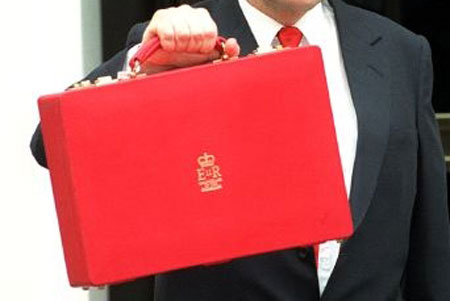
As Chancellor George Osborne ‘levelled with people’ yesterday about the current state of the economy, he announced a new Mortgage Guarantee and a £3.5 billion Help-to-Buy shared equity initiative to help stimulate the housing market.
Help-to-Buy Scheme
As deposits remain the most significant stumbling block facing buyers, including second steppers, the news that the Government will essentially underwrite the risk to lenders should go a long way.
The scheme’s interest free shared-equity loans will be a boon for people looking to buy in areas where the property market is strong. It will also help developers to build more homes to rent.
The scheme for those struggling to find mortgage deposits will include £3.5 billion for shared equity loans, and a Government interest-free loan, for up to five years, worth 20 per cent of the value of a new-build house.
The loans will be available to those who can find a 5 per cent deposit with the loan worth up to 20 per cent of the value of a home worth up to £600,000 and repayable when it is sold.
Osborne told the Commons: "The deposits demanded for a mortgage these days put home ownership beyond the great majority, who can't turn to their parents for a contribution.
"And that's not just a blow to the most human of aspirations, it's a setback to social mobility and it's been hard on the construction industry too.
"This Budget proposes to put that right, and put it right in a dramatic way."
Meanwhile the government is offering mortgage guarantees “sufficient to support £130 billion worth of loans”, which will be available from the start of 2014 and will run for three years.
The initiative broadens out a previous scheme called First Buy, which has been offering equity loans to first-time buyers only. Help-to-Buy offers a helping hand to home movers as well as first-time buyers.
Both schemes will be available to first-time buyers and existing homeowners and will only be offered on a repayment basis, not interest-only. In each case they will have to qualify for a mortgage as normal and lenders will be left to set the rates on the loan.
Some have already raised fears that there is a risk that the scheme may lead some into paying inflated prices that are often demanded for new-build properties. In many areas of the country, new build properties have shown a worrying tendency to lose value quickly, and it can take them as much as five years to appreciate in any noticeable way.
Some commentators are seeing Help-to-Buy as a deliberate echo of Thatcher’s Right-to-Buy, which was the biggest effort so far to help those buying new houses.
Osborne said the scheme will be available to everyone who wants to buy a home from next year.
OTHER PLANS
Build-to-Rent
The £200 million Build-to-Rent fund, announced at the Autumn Statement last year, will be extended. This fund will be expanded to £1 billion to support the development of more homes in England. The aim of which is to provide equity or loan finance to support the development finance stage of new homes, for private rent.
Right-to-Buy
A new generation of home-ownership in the capital was announced as the Right-to-Buy scheme was extended to £100,000, raising the maximum discount for tenants in London.
Funding for Lending
Osborne revealed that he has held talks with the Bank of England about extending the Funding for Lending Scheme.
The scheme intended to boost lending to businesses and households by offering lenders cheaper funding in an attempt to get them to increase net lending levels.
Retail-to-Resi
The Government confirmed it would consult on allowing further flexibilities to enable change of use from agriculture and retail uses to residential without the need for planning permission as part of a series of new measures to “increase responsiveness within the planning system”.
Setting out further amendments for its reform of the planning system, the Government said the National Planning Policy Framework, published in March 2012, is already having an effect with the “proportion of planning applications being approved at a ten-year high and the pace of local plan making increased”.
Sipps
The Government is considering a relaxation of the rules to allow, for the first time, unused commercial property to be converted to residential use within a self-invested personal pension (Sipp).
The Treasury said in Budget documents: "The Government will explore with interested parties whether the conversion of unused space in commercial properties in high streets and town centres to residential use could be encouraged by amending Investment Regulated Pensions Schemes rules. Any amendments would need to be consistent with sound public finances and the Government’s wider pension strategy."
Stamp Duty Reserve Tax
The UK has moved to increase the competitiveness of the UK asset management industry by abolishing a stamp duty reserve tax for UK-domiciled funds.
Osborne has scrapped the UK’s stamp duty reserve tax on funds, in a move aimed at boosting the asset management industry.
“In places like Edinburgh and London we have a world-beating asset management industry, but they are losing business to other places in Europe,” Osborne said in his speech.
Business Bank
Chancellor George Osborne has revealed that the Government-backed Business Bank, which will deploy £1 billion of new capital to improve business’ access to finance, will unveil its strategy on tomorrow, Friday 22nd March.
The Bank’s business strategy will set out an accelerated timetable for how it will improve existing access for small and medium-sized enterprise (SME) to funding support schemes.
A £300 million investment scheme will also be launched in spring this year to help diversify and expand the supply of lending to SMEs and mid-sized businesses.

Leave a comment