


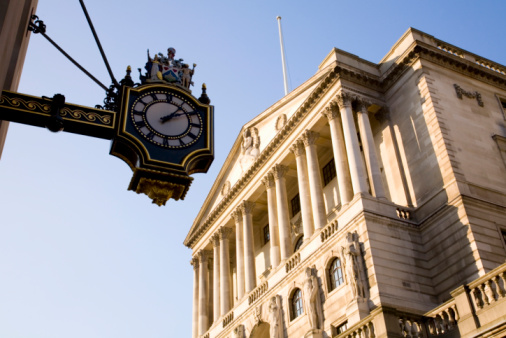
Mark Carney, in his first major speech as Bank of England Governor, yesterday announced that the 'safest' banks would be in line for a £90 billion boost....
<
div>Mark Carney, in his first major speech as Bank of England Governor, yesterday announced that the 'safest' banks would be in line for a £90 billion boost.
In his “Crossing the threshold to recovery” speech, he said that the BoE will drop strict capital rules for these lenders, allowing for more funding to be available to households and businesses. I understand the need to implement safety nets from the aftermath of the financial crash, but some of the caps are ridiculous, especially when one looks at smaller lenders.
If banks are considered safe by the BoE, in line with the liquidity buffer set, it will allow a reduction of up to 20 per cent in liquidity holdings. Therefore, if the largest eight lenders take advantage of this announcement, it is estimated that there will be another £90 billion to lend out.
However, many are struggling to boost their capital buffers and indeed some are struggling to balance their sheets, with Co-op expected to announce this morning losses of around £500 million.
The news came as CML stats depicted how buyers are being forced to find record sums due to mortgage lending soaring.
The average deposit for first-time buyers in London hit £64,000, according to the CML, and the average London FTB paid £256,853 for their home in Q2. These were bought with an average loan of £192,640, representing 75 per cent of the price and an average deposit of £64,213.
Raising prices and lenders' refusal to advance "high risk" mortgages means they are being forced to find even more cash to own a property. One in ten home loans to FTBs is for at least £500,000, the highest proportion on record.
Carney also warned against raising interest rates yesterday. He warned against "choking off" the recovery by raising interest rates prematurely. Carney is under fire for risking a new property bubble over his long term strategy of keeping interest rates unchanged until the unemployment rate hits 7 per cent, which will probably be until 2016.
However, he did state that this 7 per cent target for unemployment would not necessarily trigger the BoE into raising interest rates.
However, the sad fact remains that with record low interest rates the burden on new property owners who can raise the cash is much lower now than during the boom before the financial crash.
Many FTBs will be relying on support from the bank of mum and dad as house prices boom and the private rental sector becomes extortionate in some areas of London.
Land Registry results today are expected to show that London house prices have risen to a record high last month.
Carney said: “Some argue that the repair of banks’ balance sheets holds back economic recovery because it causes banks to cut back their lending. The reality is the opposite: where capital has been rebuilt and balance sheets repaired, banking systems and economies have prospered.”
Forgive me if I’m wrong, but it is quite clear that some of the main banks, not all of them, have been using FLS money to help repair their balance sheets already, which will inevitably lead them into a position to lend more money in the future.
However, the taxpayer at the end of the day has helped bailout some of these firms, like Lloyds, and they have seemingly reduced net lending across the board. Banks aren’t taking risky loan deals, but their loss is challenger banks’ and bridging lenders’ gain.
It is also true to point out that despite record levels in confidence recently, from the triple dip recession predictions from earlier this year, there is still the tendency for SMEs to not truly know that they can approach alternative lenders. The news that over half of firms predict growth is obviously great and welcome, but will they get the support that is truly needed?
SMEs are the lifeline to the economy and the government needs to highlight alternative finance options as they are confident, just not in the banks!
Many perceive recent reports that have come out depicting how big the bridging market may not be entirely accurate, but one thing is true, and that’s that alternative finance across the board is on the up.
We have nearly finished the quieter month of the year, when many of you are still on holiday… So enjoy the remaining week, unlike the MPs who have seemingly been called back to pre-debate the postponed vote on Syria next week.
September is going to get busy! Over the next few months new lenders on the first and second charge fronts will emerge, new packagers, new high street funding lines, revamped products, autumn incentives, the conference season and much more.
Stay tuned in to B&C for all the latest news.
Have a good week.
Jason
Email: [email protected]
Twitter: @JasonMcGeeAbe

Leave a comment