


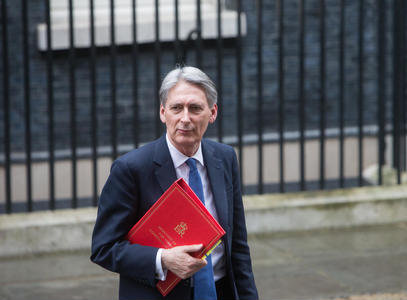
Read the summary of key changes in the Autumn Statement 2016
The most notable changes Mr Hammond revealed included a £2.3bn Housing Infrastructure Fund to build up to 100,000 new homes in areas of high demand, £1.4bn to be invested in the delivery of an additional 40,000 affordable homes, and the banning of letting agent fees to tenants “as soon as possible”.
£400m will also be injected into venture capital funds through the British Business Bank, unlocking £1bn of new finance for growing firms.
Since Mr Hammond revealed the government’s priorities this afternoon, the financial industry has been divided over some of the changes.
The housing infrastructure fund
Roy Pinnock, planning partner at law firm Dentons commented: "The overall commitment to housing is welcome mood music, but the lack of detail on powers and fiscal incentives to support locally led garden towns to deliver at the scale needed leaves a hole.
“Expanding grant funding for affordable tenures is great news, but at £25,000 per unit it’s not going to be life changing.
"The £2.3bn housing infrastructure fund could be a game changer if it’s used to reward areas for proactively planning for growth.
“Making an up-to-date housing land supply a condition for at least some of the funding would dangle the right carrot for authorities that currently only have the stick.
“The lack of fiscal measures for new settlements – incentivising forward funding of major infrastructure that can unlock delivery at real scale – is disappointing, though.
"Without the housing white paper, there is also still a wait to see how the NPPF [National Planning Policy Framework] is going to be reshaped and in particular how housing land supply and local plan duties will be re-set following expert advice on accelerating delivery.”
Mark Hayward, managing director of the National Association of Estate Agents (NAEA), added: “The measures announced during the Autumn Statement today to boost housebuilding go some way to making the housing market work for everyone, but quite frankly do not go far enough.
“The Housing Instructure Fund, as well as the fund to build 90,000 affordable homes in London will act as catalysts to start closing the gap between supply and growing demand, but what we really need to see now is properties being built quickly.
“The government has a longstanding history of announcing numerous housebuilding pledges, but in the last few years we’ve not seen a sufficient impact on supply to make a dent in providing the affordable homes we really need. The detail in the housing white paper will be crucial – let’s hope there are far more detailed plans in there when it’s released.”
Rob Weaver, director of investments at property crowdfunding firm Property Partner, stated: “We’re pleased that much of the chancellor’s supportive messaging on the property market in the build-up to his inaugural Autumn Statement has come to pass, with the commitment to more than double annual capital spending on housing.
“Moreover, the National Productivity Investment Fund of £23bn, with its focus on housing, infrastructure and disruptive technologies, shows the government recognises the biggest challenges and opportunities for our economy.”
Jonathan Sealey, CEO of Hope Capital, said: “The chancellor’s commitment today to provide an extra £1.4bn to help deliver up to 40,000 new homes is, of course, welcome news. For an industry where demand continually outstrips supply, with a generation of first-time-buyers desperate to escape the rental sector, this is a step in the right direction.
“However, 40,000 homes is frankly a drop in the ocean when the target is to build one million by 2020. According to a recent survey, we need to build 685 new homes every day to even meet the current shortfall of 915,000; with existing delivery rates at 475 per day. The plain fact is that with the best will in the world we are nowhere near our target.
"Perhaps rather than just pledging money to help, the government should be looking at the reasons why.
- What are the key changes from the Autumn Statement 2016?
- Autumn Statement 2016: Letting agent fees banned
- Autumn Statement 2016: Chancellor announces £400m venture capital investment
“We all had high hopes that the chancellor would tackle the one thing that many believe is killing the market, but disappointingly stamp duty was again conspicuous by its absence.”
Affordable housing
Jamie McKie, planning senior associate at law firm Dentons, stated: "Affordable housing is heading towards life support – delivery in 2015/16 was 52% lower than last year. Today's announcement of a funding injection to deliver 40,000 affordable homes is welcome, and it’s a clear recognition that addressing the housing shortage is not simply about building more homes.
We need more homes, but they must meet a variety of needs. There are further signals of a softening of the government's stance on starter homes – tenure flexibility replacing David Cameron's commitment to a single tenure.
"Today's statement gives some clues about the government's direction of travel but, funding commitments aside, offers little substance. We still await the detail in the housing white paper which we are told will be published "soon".
"Reasons for the delay are unclear.
"Have responses to leaks on more radical measures, such as penalising developers for slow delivery, prompted a re-think?"
Banning letting agent fees to tenants
Benson Hersch, CEO of the Association of Short Term Lenders said: “While there was a modicum of good news where investment in housing was concerned, it’s disappointing that there was no change to the rather punitive taxation proposal for consumer landlords.
“The banning of upfront fees by letting agents to tenants is well overdue, I just hope there will be no corresponding hike in fees for landlords as these are already too high and not value for money.”
David Whittaker, managing director of Mortgages for Business, said: “Unsurprisingly, the chancellor demonstrated his commitment to the stance taken by his predecessor by ignoring the calls made by landlord groups to roll back tax changes, some of which have yet to take effect.
“In reality, I expect that the impact of measures announced in the Autumn Statement on residential landlords will be minimal. For example, landlords should be more than able to absorb the increased cost of insurance premiums.
“And, as much as Mr Hammond hopes that letting agents will be able to absorb the costs involved in banning fees to tenants, I have no doubt the costs will be passed on directly to landlords who will, in turn, pass them down to tenants.”
Ian Thomas, co-founder & CIO of LendInvest, added: "Scrapping letting agency fees is surely at odds with the government's goal to promoting a healthy rental market. Landlords will be squeezed from yet another angle, while many tenants will eventually foot the bill.
"Letting agents should be expected to account for the fees they charge, not pass the cost of the work they do to landlords.
"The government cannot drive forward its strategy for productivity if it doesn't create a mixed-tenure property market that's truly fit for purpose. Until we fix the housing crisis, nurturing a healthy rental market is as important as helping more people to own their own homes."
Mark Harris, chief executive of mortgage broker SPF Private Clients, said: “The removal of fees for tenants could potentially be further bad news for landlords who are already being hit from every side with the reduction in mortgage interest tax relief and higher stamp duty on purchases. It is yet another thing for new landlords to think about – will they face higher costs? They can only increase rents so far.”
Islay Robinson, CEO of high-net-worth London mortgage brokerage firm Enness Private Clients, reacted: “The announcement that letting agents’ fees will now be the financial responsibility of the landlord, rather than the tenant, is not welcome news and creates a false economy.
“Not only will it deter investors from entering the buy-to-let market, leading to a reduction in much needed stock levels, but the tenant will be unlikely to benefit from this ‘saving’ in the long run.
“Would-be landlords have already been discouraged from entering the market, thanks to the extra 3% stamp duty incurred on buy-to-let properties and reduced tax allowances, and this is a move which further deters this type of investment.
With home ownership still a key issue and unattainable [for] many, we should be encouraging this type of tenure, not attacking the market further.
“A more positive move would have been to regulate these fees, ensuring fairness across the board, rather than simply shifting the charge to landlords.”
Tina George, head of real estate at leading law firm DMH Stallard, said: “The ban on tenants having to meet the fees of renting property will be a blow for millions of landlords, and while more detail is awaited, this is likely to further impact on the profitability of buy-to-let investments in the future.”
Right to Buy pilot
Jeremy Leaf, north London estate agent and a former Royal Institution of Chartered Surveyors residential chairman, said: “It sounds to me as though the government is kicking Right to Buy into the long grass. It was a manifesto commitment to roll it out across the country, but the government isn’t going to do that now because it is nervous about the cost.
“One size does not fit all when it comes to housing and what is appropriate in one area where there is a shortage, or the type of property may not be suitable – three-bed semis, for example, rather than flats in tower blocks. There is another supply issue here because stock is not being replaced on a one-for-one basis, as was originally promised.”

Leave a comment