


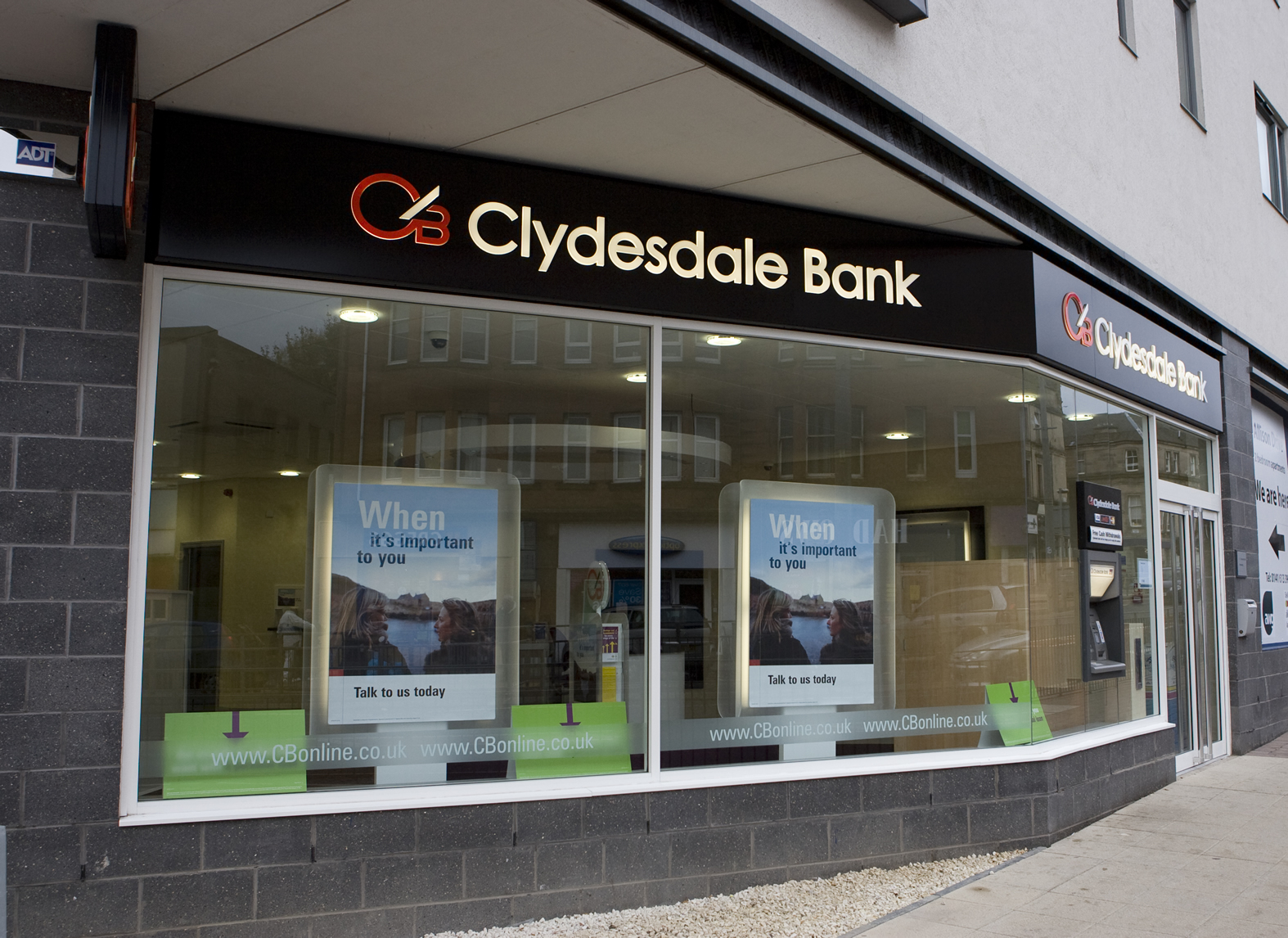
A bank in the middle of recalling £300 million worth of commercial loans has responded to questions arising from its "aggressive" reclamation procedures, B&C can exclusively report..
<
div>A bank in the middle of recalling £300 million worth of commercial loans has responded to questions arising from its “aggressive” reclamation procedures, B&C can exclusively report.
A spokesman from National Australia Bank (NAB), which owns Yorkshire Bank and Clydesdale Bank, has replied to queries raised by Clive Betts, MP for Sheffield South East.
Mr Betts had previously been in contact with B&C following the initial news that NAB was to appear before a Government tribunal over its “aggressive” recall procedures.
In its response, the bank has claimed that its approach to reclaiming its entire commercial portfolio has arisen out of a need to meet additional costs maintained as part of its withdrawal from the commercial lending market.
Having borrowed the capital lent to borrowers on fixed terms, NAB has asserted that it was itself “locked into” the life of the loans in question, so that if loans were terminated early or its interest rates reduced, the bank faced significant costs itself.
Mr Letts raised concerns that several NAB customers who had approached him could not cope with the heightened level of interest, exacting terms and inflexibility of the bank to rearrange deals.
The bank’s representatives went on to say that each case would be considered on its individual merits but, in the first instance, NAB’s preference “would always be to see all monies repaid in full, as any losses incurred by the bank reduced its ability to offer new lending to businesses and personal customers”.
B&C previously heard from a mortgage broker and commercial landlord who told us that changes in the covenants on rearranged Yorkshire Bank deals meant that they faced recalls across their own portfolios.
In particular, they raised concerns that NAB was revaluing properties in order to claim that customers were in breach of their contractual position with regards to the LTV agreed.
NAB denied such allegations, stating that there was “a requirement to revalue properties at intervals”, citing that the terms of most of their commercial products contained an agreement that valuations would be obtained every three years by bank-approved valuers and at the customers’ expense.
The bank did not reveal whether they would continue to pursue assets from the business partners of those whom it considered to be in arrears, nor were its representatives available for further comment.
Mr Betts himself said: “I put very clearly to NAB my belief that the discussions now taking place between the bank and its customers would in some cases need to consider the possible reduction of the high interest rate being paid, to waive or at least reduce redemption penalties and accept a payment of only part of the loan.
“If NAB’s intention really was to assist existing customers to secure alternative financing then it seemed to me that this would only be possible through the making of such concessions. Equally, if NAB is determined to seek to recover the money loaned in full, such concessions would very likely lengthen the time it would take to achieve this, though I pointed that simply forcing businesses into liquidation would be unlikely in the present climate to realise more than a fraction of the money NAB is seeking to recover.”
He added: “NAB confirmed that concessions might well be made and that appointing receivers or administrators was only ever done as a last resort and where no alternative could be agreed between the banks and its customer.”
NAB’s statement read: “NAB indicated that all of the paperwork associated with their loans made it clear that no advice was being offered and that customers should seek their own advice before committing to the loans.
“The loan documentation states explicitly that customers should not enter into the loan if they did not understand the risks (including, in particular, the condition relating to break costs). The documentation also states that the Bank strongly recommends that customers take independent legal and financial advice before signing the document.”
NAB has also indicated that it is willing to investigate the handling of all the loans of customers who have complained thus far to Mr Betts in order to seek a “mutually agreeable orderly withdrawal”.

3 Comments
Tony Burlingham
This is exactly what happened to me. I was given just 8 weeks notice that Clydesdale required full repayment of my £1.4 million loan secured on various residential properties. They even stated that I was a good customer but had to seek alternative financing. 8 weeks is an impossibly short time to arrange re-finance as valuations, legal fees all take time and money. I did get 2 x 2 month extensions but each time a 1.5% facility fee was added together with a higher rate of interest. I did eventually manage to refinance with Shawbrook Bank but at an interest rate of 6.95% plus over £30,000 in legal,brokers and facility fees. I was definitely bullied by Clydesdale/NAB to refinance even to the extent of being summoned to a meeting in London where I was grilled why refinancing was taking so long. Please add my name to any action to betaken against NAB/Clydesdale
David Slater
The NAB statement that they continue to hide behind is designed to make people think that clients were not forced in to a TBL . the truth is that Managers and staff at NAB were driven by a bonus culture and pressured and miss sold the TBL product . The truth will come out and the walls will come tumbling down . NAB should admit what happened ,The organisation is lying and there are too many witnesses and victims .This will not go away and has to be put right .
John Green
I think the response from the Clydesdale with regard to administration being a last resort is a complete lie! I have a developer client who specialises in restoring and developing ancestral homes and who was funded by Clydesdale. When the credit crunch hit they withdrew funding and the multi-million pound project came to a halt. The clients tried without success to get the Bank to agree a buy out figure, I arranged funding and it was ready to drawdown, but we could not get any response form the bank, they put the client in to administration, we made the administrator aware of the funding offer and still reaction from the bank: This was 6 months ago and still they will not discuss the project with us.