


The stock of lending to UK businesses has contracted by around £5 billion in the past three months, as domestic firms find it increasingly hard to obtain appropriate financing, according to the latest Trends in Lending report from the Bank of England (BoE).
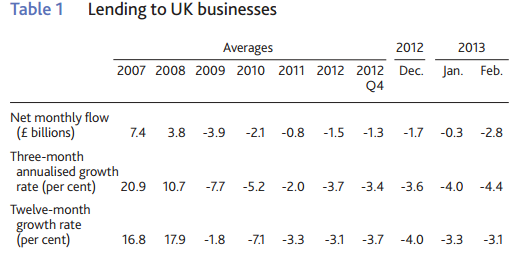
February marked the third month in a row that the growth rate of commercial lending was negative, but it was lending to small and medium-sized businesses which took the largest hit across the month.
Both gross lending and repayments by all UK banks and building societies within major industrial sectors was seen to have dropped in the second half of 2012, when compared with a year before.
Repayments remained higher than gross lending levels, however, meaning that net lending stayed at negative levels in most sectors, including real estate, manufacturing and retail trade.
The Bank’s report goes on to state that lenders have attributed the decline to the emergence of non-bank lenders in the UK, such as insurance companies and pension funds within the commercial property sector.
Larger companies appeared to take advantage of sources unavailable to smaller enterprises, such as syndicated loans, though the total value of syndicated facilities granted fell in the first quarter of 2013; the decline was broadly in line with the average change over the past year.
Provision to the real estate sector – which accounts for around 40 per cent of the stock of loans available to businesses – also saw a significant decline, showing a 5 per cent decline on figures recorded by BoE last year.
However, such a contraction matches the decline seen across the rest of the sector, which has shown relatively encouraging improvement on conditions seen in 2010.

On the other hand, the net lending by UK mortgage providers to individuals showed an increase in the first quarter of 2013.
The highest level of gross lending to first-time buyers in five years was seen at the close of 2012, with the sector increasing its share across the mortgage market to 19 per cent.
The Bank also reports that demand from such borrowers has also increased in line with the increase in house purchase demand, as indicated by a recent study undertaken by the Royal Institution of Chartered Surveyors.
Paul Aitken, CEO of alternative lender borro, said: “Once again we are faced with figures showing the availability of credit for SMEs didn’t improve over the first quarter of the year. It will be no surprise to the nation’s small businesses, who continue to suffer, that lending fell by £5 billion in the three months leading up to February in 2013.”
He added: “We have not seen any real change when it comes to enterprise in Britain and the economy remains stagnant. There is a real sense of limbo with government implemented schemes yet to have effect.
“Confidence amongst business owners needs a real boost in order for new opportunities to be seized, which will undoubtedly stimulate growth. Until then, it is a shame to see that the nation’s SMEs, that should be the life-blood of the British economy, will remain caught in a credit drought.”

Leave a comment