


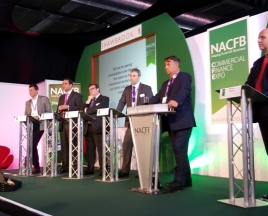
In an American-style ‘Traditional versus Alternative’ debate at the NACFB Expo 2016, Mark claimed that with 60-65% of lenders competing in the same sector, firms will start to consolidate in order to service a wider market.
“Without a doubt there will be consolidation among the alternatives.
“There are still so many areas of the marketplace that aren’t serviced by funders, so I think we’ll get consolidation of more specialist lenders buying appropriate finance [and] building partnerships with the banks.
“I think we’ll probably see 50% of the lenders in our space this time next year.”
Other lenders agreed that the alternative market was overcrowded.
John Jenkins, CEO of Amicus Finance added: “I think with marketplace lenders there’s probably too many.
“We’ve got more banks in the UK than we’ve had in 30 years, and I don’t know [how] that is sustainable.
“Can you sustain a bunch of small banks or do you get to the point where loads of [challengers] have to start getting together?
“I think there will be a bigger specialist lending market, but I think there will be fewer people doing it.”
Meanwhile, Mike Strange, Managing Director of Funding 365, argued that technology would drive consolidation between alternative and traditional lenders.
“Consolidation is inevitable, mostly because of legacy IT issues in banks,” he explained.
Mike believed banks will eventually dispose of their own systems and merge with alternative lenders to combine their broad client base with good technology.
However, Andy Bishop, National Director of Business Development SME Banking at Lloyds, warned that traditional banks would not be totally reliant on alternative technology.
“I think we will see some consolidation in the alternative and challenger market, but I wouldn’t underestimate some of the larger banks, who are having a watching brief at the moment.
“I know the number of conversations we are having with fintech businesses at the moment, so we are beginning to see that shift gradually.”

Leave a comment